Context
A seller lists a phone and receives a message from someone ready to buy. The message mentions the right item and asks about delivery. It feels like the start of a sale.
That is what makes classifieds useful to scammers. Your users expect strangers to contact them, and each listing gives those strangers a reason to start a conversation.
There is also an existing market for tools that remove parts of the work. Scrapers collect seller information. Account services advertise ready-made access. Solvers offer ways around automated checks. In research published on 10 October 2024, ESET documented how Telekopye scam groups added scraping to speed up the creation of fake payment pages. An attacker could supply a listing link and have its details pulled into the scam.
For a classifieds business, the exposure begins when an attacker gains access to users. The cost can continue through support requests, investigations and sellers churning because the next enquiry could be a scam.
TL;DR
- Listings give scammers a target, useful context and a believable reason to get in touch.
- Scrapers, account services and challenge solvers can reduce the work needed to repeat an attack.
- Passing verification does not establish that someone intends to trade honestly.
- Protect contact details and messaging, connect repeat abuse across accounts, and measure how many users scammers reach before you stop them.
Why attackers target classifieds users
A classifieds platform brings together people with an immediate goal. A seller wants to sell. A buyer wants an item, a vehicle or somewhere to live.
The scammer can use that goal to make an unusual request sound like part of the transaction. A fake buyer says a payment is waiting. A fake seller asks for a deposit. Someone claiming to arrange delivery sends a link to collect card details.
Relevant information makes the approach more convincing. A message about the exact item you listed is easier to believe than a generic request from a stranger.
The attacker wants money or information they can use to steal it. Your business carries the cost of investigating the interaction and rebuilding the user's confidence. Even where the payment happens elsewhere, the user may remember your platform as the place where the scam began.
How classifieds scams work
Seller information becomes a list of people to approach
Scraping means collecting information from pages automatically. At scale, it can turn individual listings into a searchable list of potential targets.
The scraper output below includes fields for a seller's name, phone number, WhatsApp contact, address, location and ratings. That combination could help someone choose whom to approach and move the conversation outside the platform.
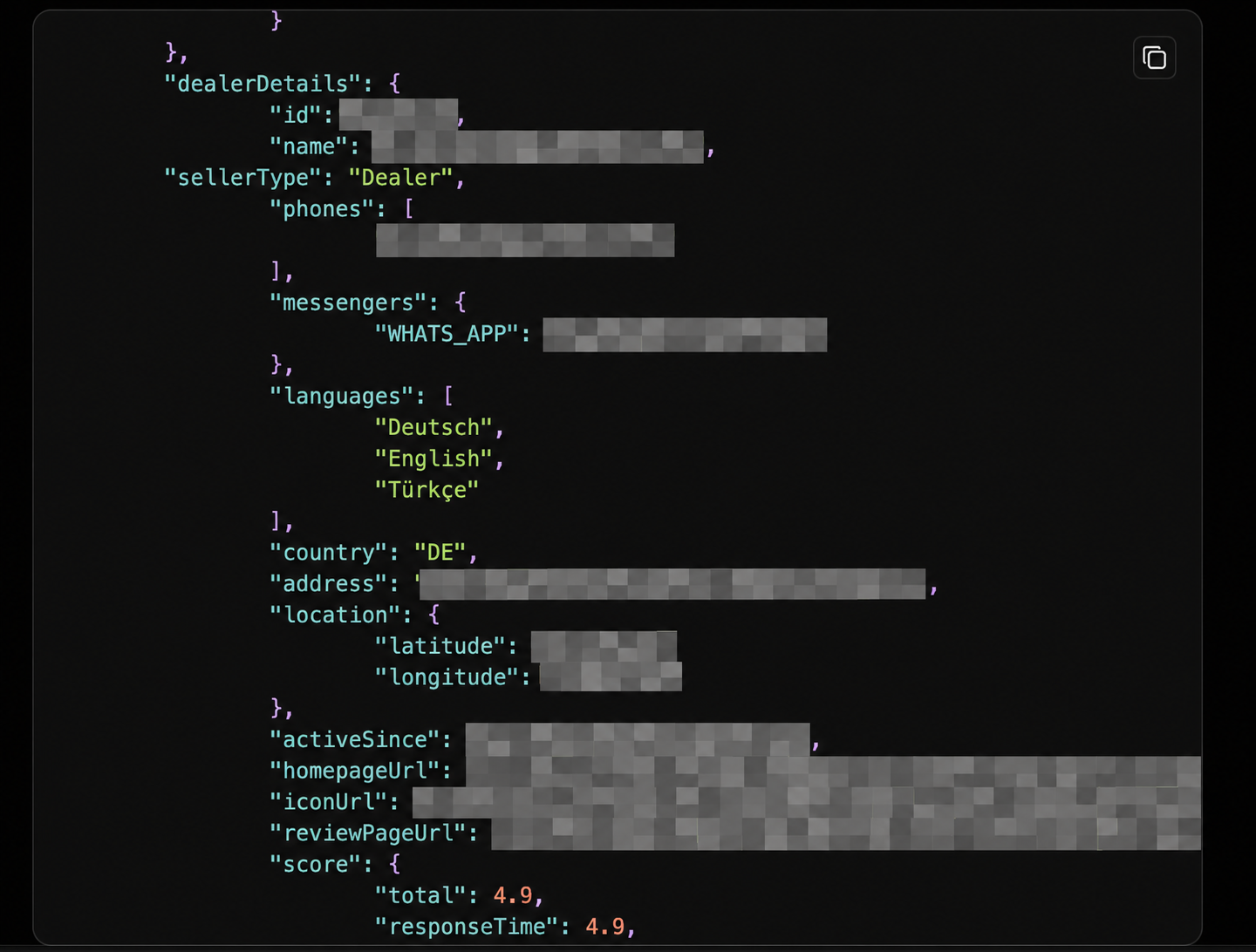
Scraping also has legitimate uses. The concern is repeated collection that enables unwanted contact. ESET's research of 23 November 2023 documented scam groups using scraping services to collect listings and user information for target selection.
For your team, repeated contact-detail reveals across unrelated listings deserve attention. Ordinary page-request logs may show browsing volume, but you need to record contact reveals separately to understand whose details were exposed.
Accounts can be supplied as a service
Account-generation services advertise the repetitive work of creating profiles. If an attacker can obtain replacements easily, removing one account may interrupt them only briefly.

The business question is how much access a new account receives. Can it immediately contact many sellers? Reveal phone numbers? Publish listings with external payment instructions?
Record when an account is created and when it first starts contacting users. Several new accounts repeating the same sequence are more useful to investigate together than as separate support cases.
Challenge solving has free and paid offers
A solver is software or a service intended to get automation through an anti-bot check.
One supplied post advertises an open-source solver for an established anti-bot provider.

A separate price list advertises packages from 10,000 solves for €10 to four million for €1,000.

These offers suggest that some attackers can obtain tools instead of developing every component themselves. Free software still takes work to use, and a paid package may fail against a particular deployment. Your own results should determine whether the protection is working.
Verification itself becomes a selling point
Another supplied advertisement offers account creation without a one-time password, or OTP, and without phone or mailbox access. It also offers delivered accounts or the underlying software.
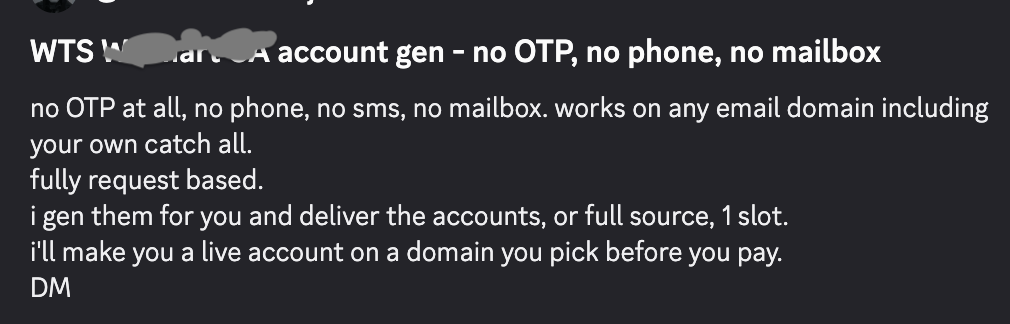
This an useful prompt for a business review: check that every registration route enforces the verification your product promises, and that unverified accounts cannot perform actions reserved for verified users.
The conversation moves towards the scam
Once an attacker reaches a user, the interaction may be handled by a person. A human can answer questions and adjust the story while software handles collection or account creation.
The request may eventually move to another messaging app or a fake payment page. Scammers usually move conversations away from marketplace chat to avoid its moderation.
Look for repeated outreach to unrelated sellers, similar deceptive requests and confirmed user reports. Moving a conversation elsewhere is common in legitimate trading too, so that action alone should not trigger an accusation.
Why traditional defenses miss classifieds scams
CAPTCHAs can slow automation. They cannot establish honest intent and a person who passes a challenge can still send a scam message.
Multi-factor authentication, which combines different forms of proof during login, helps protect accounts from takeover. Phone or email verification also confirms access to that channel. Neither tells you whether the account owner intends to deceive another user.
A web application firewall filters web requests and can block many technical attacks. A correctly formed message sent through an allowed feature may still be fraudulent.
Rate limits reduce volume. Separate limits for each account can miss related accounts sharing the work.
Static rules help stop known patterns, such as a confirmed scam link. Attackers can change the link or wording. Review what the user is being asked to do, alongside the account's behaviour.
How to stop classifieds scams before they reach more users
Start with access to people
Review the actions that give an attacker reach: revealing contact details, starting conversations and publishing listings.
A new user should be able to make a normal enquiry. Repeatedly collecting contact details across unrelated categories needs a different assessment. Apply additional checks or temporary restrictions where the behaviour warrants them, and give legitimate users a way to resolve mistakes.
Check risk when the action happens. A registration check from yesterday cannot explain everything an account does today.
Connect reports with the activity behind them
When a user reports a confirmed scam, trace how the account reached them. Review earlier contact reveals, conversations and related accounts.
Record the account, time, listing, action and outcome. Session and device connections require additional data collection; ordinary server logs do not automatically identify the same device across accounts.
Shared devices and networks are common. Combine those connections with behaviour and confirmed reports before restricting related users.
Make genuine transaction steps easy to recognise
Where your platform supports payments, let users check payment status inside the product. Explain whether receiving money ever requires following a link sent by another user.
Where you only introduce buyers and sellers, make that boundary clear. Place useful warnings beside suspicious requests and make reporting possible from the conversation itself.
Expect attackers to return
Retooling means changing accounts, tools or tactics after a defense interrupts an operation. An attacker might replace banned profiles, change a message or spread activity over more accounts.
After enforcement, check whether the same targeting pattern returns. A drop in reports may also reflect delayed reporting, so compare activity over time.
Carry the evidence from the previous investigation forward. Otherwise, your team can end up rediscovering the same operation every time it changes an account name.
Measure exposure and genuine participation
Start with four measures:
- How many distinct users confirmed scam accounts contacted before restriction.
- How long it took to contain the activity after the first identifiable abusive action.
- How often confirmed abuse returned through related accounts.
- Whether legitimate enquiries, replies and completed listings were affected by the controls.
Track these alongside support time and restrictions reversed after review. A higher block count is useful only if it helps reduce harmful contact without making genuine trading harder.
How Kairal can help
Kairal combines bot detection and fraud detection in one system. That approach addresses both automated access and the behaviour that makes an interaction risky.
Kairal Business Defense, currently in early access, links sessions, devices, accounts and payments so coordinated activity can be traced across them. It includes bot protection and machine-learning abuse detection, giving teams connections to examine when related accounts repeat an abusive pattern.
Learn more: How Kairal can help you protect your classifieds marketplace from repeat abuse